A professional aquarium installation is the process of designing, plumbing, setting up, and cycling a fish tank so it’s structurally safe, properly filtered, and ready for livestock from day one. It covers everything from choosing the right tank and stand to installing filtration, lighting, and life-support equipment, then guiding the tank through its initial nitrogen cycle before any fish go in.
Whether you’re adding a reef system to a Nashville living room or a 150-gallon lobby display to a Murfreesboro medical office, the installation phase is what determines whether an aquarium thrives for years or turns into a constant headache. Here’s what actually goes into it, what it costs, and why most owners bring in a professional installer rather than going the DIY route.
An aquarium looks simple from the outside, but it’s a closed biological system. Get the setup wrong and you’re dealing with cloudy water, algae blooms, or a fish kill within weeks.
The biggest risk during any new setup is an incomplete nitrogen cycle. Ammonia and nitrite from fish waste are toxic, and a tank needs beneficial bacteria in place to break them down before livestock can safely go in — a process that typically takes four to six weeks when done without professional support (PetMD). A professional installer plans around this from day one, using proper filtration sizing, bacterial starter cultures, and water testing so the tank is ready faster and stays stable.
Professional installation also matters for anything beyond a small desktop tank:
Structural support. Water weighs roughly 8.3 lbs per gallon, so a 125+ gallon system can weigh well over 1,000 lbs once you add the stand, substrate, and rock. Larger or oddly placed tanks may need a structural engineer to confirm the floor can safely support that load.
Plumbing and electrical safety. Sumps, drains, and multiple pumps and heaters on one circuit need to be installed correctly to avoid leaks or electrical hazards.
Renters and commercial spaces. If you’re leasing your home or office, most landlords and property managers want a written statement on aquarium restrictions before installation, and renters insurance is worth confirming in advance.
A professional installation generally follows the same sequence, whether it’s a 40-gallon freshwater tank or a custom 300-gallon reef system:
Free consultation and site assessment. The installer reviews the space, discusses your goals (freshwater, saltwater, reef, planted, or turtle), and checks for structural, electrical, and access considerations.
Design and equipment planning. Tank size, filtration (canister, sump, or protein skimmer), lighting, and aquascape materials are selected to match your livestock goals and budget.
Site preparation. For larger systems, this can include a structural evaluation, dedicated electrical outlets, or plumbing for an in-wall or built-in display.
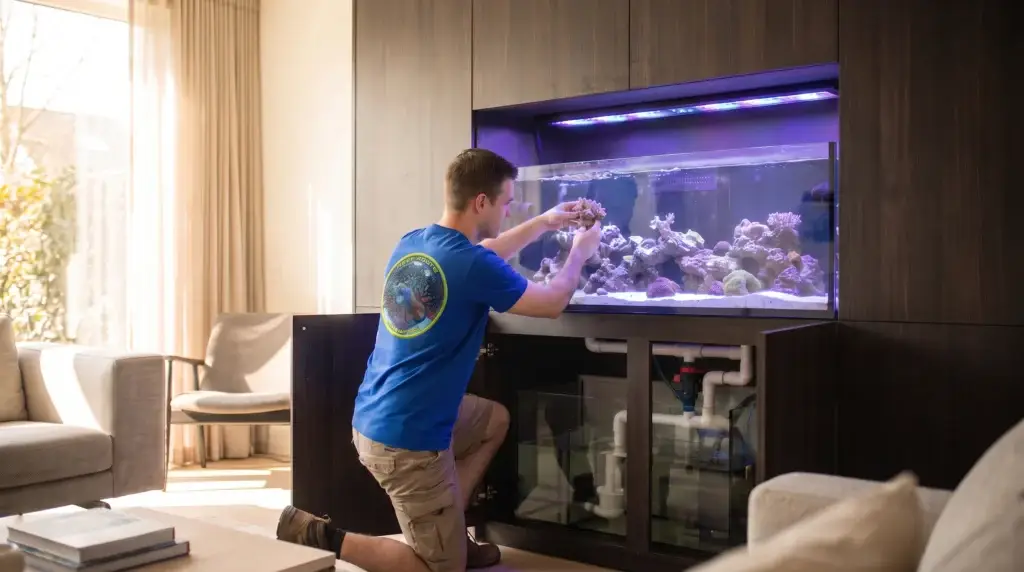
Delivery and setup. The tank and stand are placed, substrate and hardscape are added, and filtration, heating, and lighting equipment are installed and tested.
Filling and cycling. The tank is filled, water is treated, and the nitrogen cycle is started — this is the step most DIY setups rush, and it’s the most common reason new tanks fail.
Stocking and walkthrough. Once water parameters are stable, fish, corals, or plants are added gradually, and the installer walks you through maintenance basics.
Ongoing maintenance plan. Most installers offer a follow-up service schedule so the tank stays balanced instead of drifting back toward the problems a fresh cycle just solved.
There’s no single price for aquarium installation because tank size, water type, and complexity all move the number significantly. Industry cost breakdowns show just how wide that range is (Champion Aquariums):
| Setup type | Typical installed cost |
|---|---|
| Small desktop tank (5–20 gallons) | $500 – $1,500 |
| Mid-size home aquarium (40–75 gallons) | $2,000 – $5,000 |
| Large home aquarium (100–200 gallons) | $5,000 – $15,000 |
| Showpiece or commercial tank (300+ gallons) | $15,000 – $50,000+ |
The main factors that move a quote up or down:
Freshwater vs. saltwater/reef. Saltwater and reef systems need protein skimmers, sumps, and reef-grade lighting, which typically pushes cost well above a comparable freshwater setup.
Custom or built-in tanks. In-wall installations require additional plumbing, electrical, and carpentry work compared to a standard freestanding tank and stand.
Livestock and aquascape. Corals, live rock, driftwood, and plant selection can vary the final bill as much as the equipment does.
Site conditions. Stairs, tight access, existing electrical capacity, and floor structure all affect labor time.
Because every setup is different, we don’t publish a flat installation price — pricing is confirmed after a free, no-obligation consultation where we assess the space and your goals directly.
Freshwater aquariums — community tanks, planted aquascapes, and cichlid setups
Saltwater and reef aquariums — FOWLR (fish-only-with-live-rock) systems through full SPS reef builds
Turtle aquariums — filtration and basking setups sized for bioload
Custom and commercial installations — built-in and freestanding displays for offices, restaurants, medical and dental offices, hotels, and waiting rooms
If you’re weighing a large reef build specifically, our 180-gallon reef aquarium installation guide breaks down equipment and cost in more depth.
Reef Route Aquatics designs and installs residential and commercial aquariums throughout Middle Tennessee, including Nashville, Murfreesboro, Franklin, Brentwood, Smyrna, Mt. Juliet, Lebanon, Gallatin, Nolensville, and Spring Hill. We work directly with homeowners, offices, restaurants, medical facilities, and schools to plan installations that fit the space and hold up long-term — then we help maintain them so the investment keeps paying off.
How long does an aquarium installation take?
Setup and equipment installation for a standard tank typically takes a few hours to a full day. The tank then needs four to six weeks to complete its nitrogen cycle before it’s safe to stock (PetMD). Larger custom or built-in systems can take one to three days for physical installation alone.
Do I need a structural engineer for my aquarium?
Usually not for tanks under 125 gallons in a standard location. Larger tanks, or ones placed on an upper floor or unusual structure, may need a structural evaluation before installation to confirm the floor can safely carry the load.
Can I install an aquarium if I rent my home or office?
In many cases, yes — but we recommend confirming pet and weight restrictions with your landlord or property manager first, and checking whether renters insurance is advisable for your situation.
What’s included in a free consultation?
We assess your space, discuss the type of aquarium you want, and walk through structural, electrical, and design considerations before providing a written quote — at no cost or obligation.
Do you handle both installation and ongoing maintenance?
Yes. Most clients move into a recurring maintenance plan after installation so water quality, equipment, and livestock stay healthy long after the initial cycle is complete.
A well-planned installation is the difference between an aquarium you enjoy for years and one that fights you the entire time. If you’re considering a new freshwater, saltwater, reef, or commercial aquarium anywhere in Middle Tennessee, schedule a free consultation with Reef Route Aquatics, or reach us directly at (615) 410-7038 or Service@reefrouteaquatics.com.
Related: Aquarium Installation Services · Custom Aquarium Design · Aquarium Service FAQ
We use cookies to personalize content, provide social media features, and analyze our traffic. We also share information about your use of our site with our analytics partners. You can change your preferences at any time. For more information, please see our Privacy Policy and Cookie Policy. Privacy Policy