Aquarium Water Testing
Detailed water analysis, ICP testing integration, and digital reporting for reef, freshwater, planted, turtle, cichlid, and saltwater aquariums throughout Middle Tennessee.
Many aquarium problems begin long before visible symptoms appear. Poor water chemistry can lead to algae outbreaks, coral decline, fish stress, plant deterioration, cloudy water, and long-term instability.
At Reef Route Aquatics, we use professional testing procedures and digital aquarium reporting to help identify issues early and maintain long-term aquarium stability.
Our testing services support:
• Reef aquariums
• Planted aquariums
• Freshwater community aquariums
• Turtle aquariums
• Cichlid aquariums
• Saltwater fish only aquariums
• FOWLR aquariums
We help aquarium owners throughout Middle Tennessee maintain healthier aquatic environments through accurate diagnostics, parameter tracking, and expert recommendations.
ICP testing provides laboratory-grade analysis of your aquarium water to identify trace element imbalances and hidden contaminants that standard hobbyist tests cannot detect.
This service is ideal for advanced reef aquariums experiencing unexplained coral stress, poor coloration, or long-term instability.
Advanced reef systems require significantly more precision than standard aquariums. SPS and LPS corals consume major and minor elements rapidly, making detailed testing essential for stability and growth.
Our advanced reef diagnostics help identify chemistry imbalances that affect coral coloration, growth, and overall reef health.
Designed for freshwater aquariums and fish-only saltwater systems, this testing service focuses on the core parameters necessary for healthy fish and stable water quality.
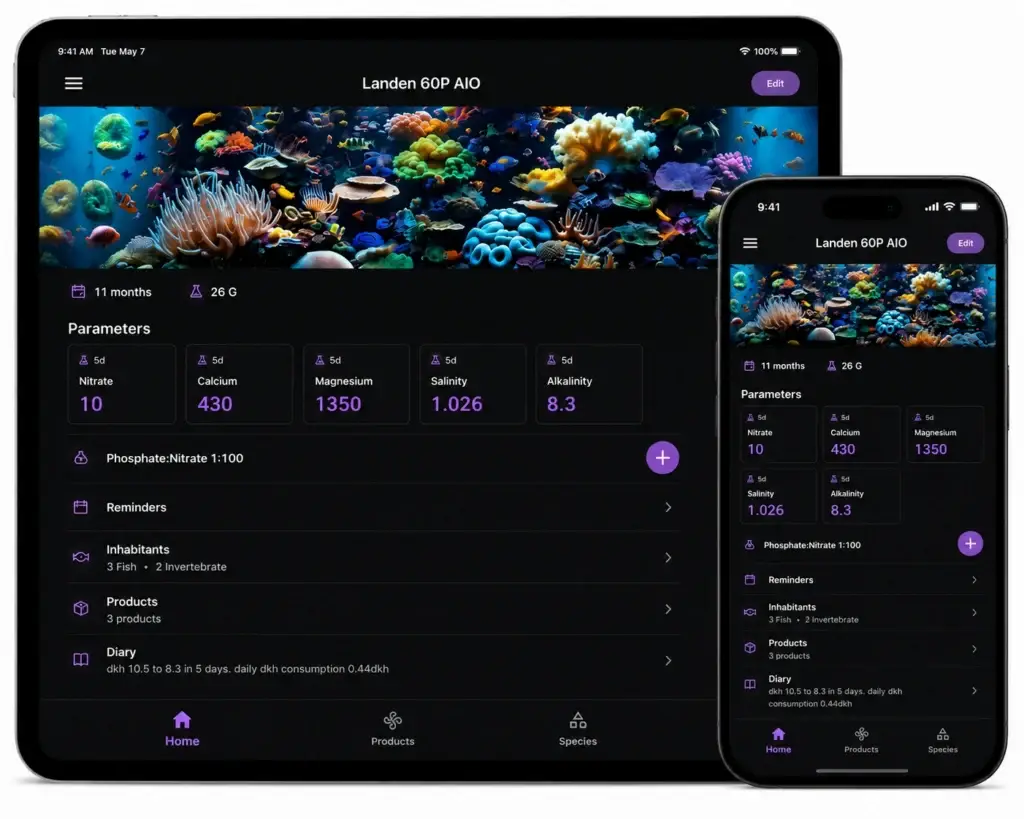
Reef Route Aquatics uses TankStats™ to create professional digital aquarium service reports and parameter tracking for our clients.
Instead of handwritten notes or inconsistent testing records, our system allows aquarium owners to monitor aquarium health over time with organized digital reporting.
Our reporting process may include:
• Water parameter tracking
• Historical trend analysis
• Maintenance records
• Service documentation
• Livestock observations
• Equipment monitoring
• ICP test result integration
• Recommended corrections and action plans
This creates a more professional aquarium service experience while helping identify issues before they become major problems.
For reef aquariums and advanced saltwater systems, Reef Route Aquatics can help integrate ICP testing into your aquarium maintenance program.
ICP analysis helps identify:
• Trace element imbalances
• Heavy metal contamination
• Hidden nutrient issues
• Long-term chemistry instability
When combined with routine aquarium testing and TankStats™ reporting, ICP analysis provides a more complete understanding of aquarium health and stability.
✔ Coral color loss
✔ Excess algae growth
✔ Fish stress or unusual behavior
✔ Cloudy water
✔ Plant deterioration
✔ High nitrate or phosphate concerns
✔ Recurring aquarium problems
✔ New aquarium setup instability
✔ Unexplained livestock loss
Reef Route Aquatics combines professional aquarium experience with modern aquarium management technology to provide a higher level of aquarium care throughout Middle Tennessee.
We focus on long-term aquarium stability, detailed reporting, and proactive maintenance rather than simply performing basic cleanings.
Our goal is to help clients better understand their aquariums while creating healthier environments for fish, corals, plants, and aquatic life.
Proudly Supporting Aquariums Across Middle Tennessee.
Most freshwater aquariums should be tested monthly, while reef aquariums often require weekly or biweekly monitoring depending on livestock demands.
ICP-OES testing is a laboratory analysis that measures trace elements, contaminants, and water chemistry beyond standard hobbyist test kits.
Yes. SPS and LPS reef systems consume alkalinity, calcium, magnesium, and trace elements rapidly, requiring more precise monitoring.
Algae outbreaks are commonly caused by nutrient imbalance, elevated phosphate, excessive nitrate, poor flow, or lighting instability.
Absolutely. Unstable alkalinity, nutrient swings, contaminants, and trace element deficiencies can all negatively impact coral health and coloration.
Accurate diagnostics are one of the most important parts of maintaining a healthy aquarium. Whether you keep freshwater fish, a saltwater aquarium, or a high-demand SPS reef system, Reef Route Aquatics can help identify problems before they become major losses.
We use cookies to personalize content, provide social media features, and analyze our traffic. We also share information about your use of our site with our analytics partners. You can change your preferences at any time. For more information, please see our Privacy Policy and Cookie Policy. Privacy Policy